Chimney Fuels
You may not be aware of the fact that there are many different types of fuel available to burn in your fireplace / chimney. The fuel that you use can be determined by a number of different important factors and it is useful to be aware of these before deciding on what fuel type you decide upon. You can of course also seek advice from your chimney sweeping company, so keep that in mind over the next few minutes.
The Criteria
First, we should briefly mention the criteria because as we stated at the outset this can determine the fuel that you use. In some instances you may live in an area where there are restrictions on smoke production, so fuel such as coal and wood, would not be appropriate as you would be flouting the regulations. You also need to look at your actual fire itself as some will be designed as a coal burner whilst others are primarily for wood. If you do live in a smoke free zone, then there are further alternatives available that have been specifically designed for this purpose, so you can still enjoy the full effect without running into issues.
Coal
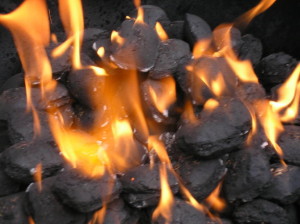
If we begin with the most well known type of fuel which is coal. This is still used by many people and it is mostly associated with the traditional open fire and capable of giving off a great amount of heat. However, it can clog up your chimney with soot quite quickly and you will need to have regular chimney sweeping and inspections to make sure that the flue itself is clear and safe. It is a wonderful fuel, but it does require a lot of cleaning up and of course it cannot be used in a smoke free zone. It should be noted that you can also use coal on some closed appliances such as room heaters and cookers.
Wood
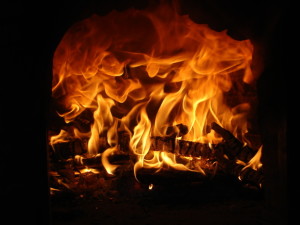
The most widely used biomass fuel is wood. Wood can be obtained in many forms notably logs, either natural hard woods, soft woods or manufactured logs – which are usually a wood/ wax mixture, chips and pellets.
In modern times, interest has grown in wood burning stoves as an environmentally friendly way of heating homes.
The idea of having a wood burning stove is certainly something that is attractive to many people, but as with the coal this is not a fuel type that can be used in a smoke free zone, unless you fit a DEFRA approved stove, this is a cleaner burning appliance and are certificated for use in smoke control areas. You do need to make sure that you have the correct wood as it must have a low resin / moisture content and you must not have any kind of paint or varnish on the wood or you run the risk of poisonous gases being emitted. The heat output is slightly lower with wood than it is with coal, but it does still give off a substantial amount of heat. Hard woods such as Oak and Ash are generally preferable to soft woods such as pine as they have a higher Calorific value and give off more heat and less soot /tar by comparison. Lots of people now buy kiln dried hard wood from sustainable sources. Being kiln dried it can be guaranteed that the wood has a low moisture content less than 20% moisture which is the recognised maximum moisture content when burning in a closed appliance.
Smokeless Fuels
You can have a ‘real’ open fire even in smoke control areas. Smokeless fuels are produced to the highest quality and standards and give consistent high performance. They are also easy to burn can emit up to a third more heat than ordinary coal. Each fuel has different characteristics regarding flame, duration of burn, response to air controls and output – your Approved Coal Merchant or the Solid Fuel Association can advise you on the best choice for your particular fire.
There are a number of different smokeless fuels on the market and the one you choose depends on whether or not you have an open or closed fire. For an open fire, there are many smokeless fuels that are usually man made and burn much easier than the naturally occurring smokeless fuel such as anthracite. You may wish to look for products such as Homefire, Excel, Briteflame, or Coalite as examples. They are readily available from a number of outlets or companies and they will still provide you with an adequate amount of heat as well as a substantial burning time.
Closed Fires
If you have a closed appliance or multi fuel stove, then of course you can use coal or wood assuming that it is suitable for use in the area where you live (DEFRA approved in a smoke control area). For a smokeless option you should look for brands such as Homefire Ovals, Econotherm, Fireglo, Sunbrite, and Coalite Nuts. There are a number of others, but the main thing is that these fuels need to be compatible with your heater and you can seek advice from the manufacturer.
As you can see there are various options available when it comes to fuels, but you do need to be certain of the best one to use so seeking advice is certainly a wise decision. Just remember to make sure that your chimney is maintained to prevent any problems in the future.
For others there are other fuel types available such as Gas and Oil. Whichever fuel is chosen, specialist advice should be sought on the suitability of your chimney for each fuel type.
Remember all fuels require ventilation for combustion purposes, so it is imperative that the correct ventilation is in place before the fireplace is used and please get your chimney swept first, just to be on the safe side.

When burning Coal it is advisable to sweep the chimney at least twice a year, for smokeless fuels at least once a year and when burning wood, every three months when the appliance is in use. This is the same whether your chimney has been relined or not. Always use a chimney sweep who can supply a Nationally recognised certificate for Insurance purposes, most insurance companies would want to see the certificate in the event of an Insurance claim.
Contact Apex Chimney Sweeps to book a professional chimney sweeping company!
