Buying Logs
When you purchase logs, generally they will be sold as either Hardwood or Softwood, seasoned or unseasoned. Below I will try to explain what is best and why.
For wood burners in particular, hardwood is without doubt the best type of log. It is much denser than softwood and it therefore burns for much longer. It comes from deciduous, broad leaved trees, unlike softwood which burns quickly (and therefore you need to re fuel more often) and comes from evergreen coniferous species such as pine and fir. Hardwood when first cut usually has a much lower moisture content to begin with and certainly contains less resin. I will talk more about moisture content later.
The main hard woods that are burnt are Oak, Ash, Beech, Birch, Cherry, Elm, Sycamore and Chestnut. Softwood species include, Fir, Pine and Cedar which are all evergreen trees. As the hard woods are denser (and burn longer) they weigh considerably more, but, take up a lot less space in the log store. So if buying logs by Volume i.e. by the cubic metre, then you would expect the softwood to cost less as it is an inferior quality wood for burning.
Likewise if you buy by Weight, say a tonne, then you will get less hard wood logs than you will softwood, but again the price for soft wood should be less. Softwood makes excellent kindling to help start your fire as it catches fir very easily and burns hot and bright.
Burning Logs
Whichever wood you decide to purchase, when you come to burn it needs to be relatively dry and seasoned, as any water left in the log when it is introduced into the fire will have to evaporate before that log will burn. This reduces the efficiency of the fire. The heat output generated by logs is measured as its Calorific Value (CV). A damp unseasoned log will give less than 50% of the energy content of a well seasoned dry log.
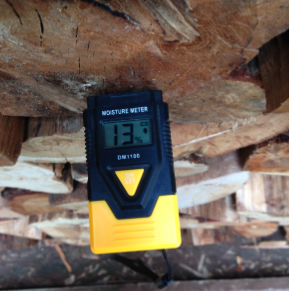
Remember, wood when first cut is at least 50% water, to get it down to into the best condition to burn means bringing that Moisture Content down to 20% or less.
This should be done by, first cutting the logs to size and then storing them id a dry, sunny position, off the ground and under cover. A purpose made wood store is ideal, these often have partially open sides and back to allow the air to flow through them but at the same time protecting the contents from the rain. If the logs can be stacked in such a way that the wind and air can circulate through them, so much the better.
Some species of wood will take longer than others to season and dry, hardwoods (because they are denser) will usually take longer than soft woods. Some hard woods such as Oak can take 2 years or more to season ready for burning, but many can be seasoned in a year or so if carried out correctly with the wood being cut and then stored at the correct time of the year.
Should the flue catch fire the tar can burn at temperatures of over 1000 degrees Centigrade, causing massive damage to the chimney itself and often resulting in the house actually catching fire. Inefficient burning also increase levels of Carbon Monoxide (Co), this is an invisible gas which can have fatal consequences should it find its way into the property (see previous blog on Carbon Monoxide).
Moisture Meters